-

Motion Signalling
Animal behaviour through a virtual lens
A paradigm to investigate interactions between habitat, weather and sensory system function ...
View MoreAnimal behaviour through a virtual lens
Project CIs:
Dr Richard Peters & Dr Tom Chandler (Monash Uni)We will use a virtual lens to take a fresh look at these signals in the environmental context in which they are performed to understand how signalling conditions affect signal efficacy. Systematic manipulation of the scene allows us to consider circumstances influencing signal effectiveness.

Experimenting with virtual habitats offers exciting opportunities for answering questions about motion signalling that would be impractical in nature. Our multifaceted strategy takes knowledge and data from nature into a virtual laboratory and involves reconstrucing microhabitats, simulating environmental conditions and scene analysis. -
Motion Signalling
Comparative study of signalling dragons
Relating motion signal structure & habitat characteristics in Australian Agamid lizards ...
View MoreComparative study of signalling dragons
Project CI:
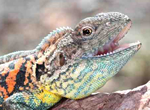
Mr Jose RamosThis project will consider movement-based signalling in an ecological framework by comparing the signalling behaviour of sympatric and allopatric species, as well as comparing the signalling behaviour of single species across different populations in a range of habitats.
Video of Amphiboilurus longirostrus at West MacDonnell National Park, Northern Territory
Video by: Jose Ramos -
Motion Signalling
Signalling by Anolis lizards of Ecuador
Evaluating the role of colour and motion in the structure of displays by Anolis lizards of Ecuador ...
View MoreSignalling by Anolis lizards of Ecuador
Project CI:
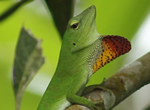
Ms Andrea NarvaezThis study will evaluate the replacement or co-utilization of motion and colour in signalling by Anolis species in Ecuador. We will evaluate the structure of displays and the habitats in which they are performed and evaluate the role of both issues in speciation.
Anolis otongae displaying in front of Anolis gemosus (the green one) in the Cloud Forest - Otonga
(Video by Andrea Narvaez) -
Acoustic Communication
Alarm calling by Australian arid zone birds
A comparative study of the anti-predator behaviour with a focus on alarm calling and zebra finches ...
View MoreAlarm calling by Australian arid zone birds
Project CI: Ms Nicole Butler
Nicole's comparative study on the anti-predator behaviour of Australian arid-zone birds has 3 main components:
• Review of important life history traits of all Australian arid-zone species, with particular focus on alarm call vocalisations.
• Comparative field study of the responses of a number of arid-zone birds to a simulated predator.
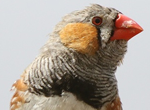
• Captive and field experiments on the zebra finch.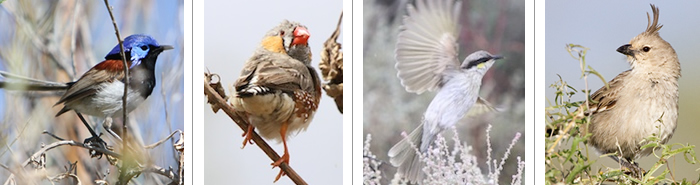
-
Motion Signalling
Signalling by Chinese Phrynocephalus lizards
Several studies investigating tail displays by the Chinese toad-head agamas ...
View MoreSignalling by Chinese Phrynocephalus lizards
Project CIs: Dr Qi Yin, Dr Dan Noble, Mr Jose Ramos, Dr Richard Peters, A/Prof Martin Whiting
• Variation in tail displays by P. vlangalii due to resident and intruder identity. (Peters, Qi, Ramos)
• Comparative study of tail displays by lizards from the genus Phrynocephalus (Qi, Noble, Peters, Whiting).
• Function of tail displays by P. vlangalii. (Qi, Peters).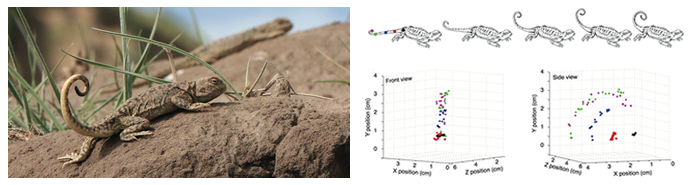
-
Motion Signalling
Do predators influence motion signalling strategies of lizards?
Models of signal evolution predict that threat of predation can influence ...
View More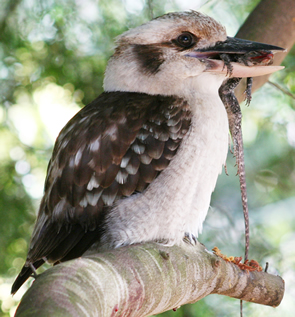
Role of predators in determining signal structure
Project CIs:
Dr Richard Peters & Ms Katy WellerWhether predators influence movement-based signalling strategies is unclear. Models of signal evolution predict that the threat posed by eavesdropping predators will influence the evolution of signal structure and moment-to-moment variation in signalling behaviour. We are exploring this possibility in Jacky lizards using the kookaburra as our model predator.
-
Motion Signalling
Energetic costs of motion signalling: insights from muscle biochemistry
Smaller muscles, such as those in the tail, require less energy to function ...
View MoreEnergetic constraints on motion signalling
Project CIs:
Dr Richard Peters, Ms Peta Taylor & Dr Robyn MurphyMovement is coordinated by the musculature and the smaller muscles, such as those in the tail, require less energy to function than larger muscle groups, such as the limbs. For this reason the tail seems ideally suited to sustained signaling and matches their behaviour.
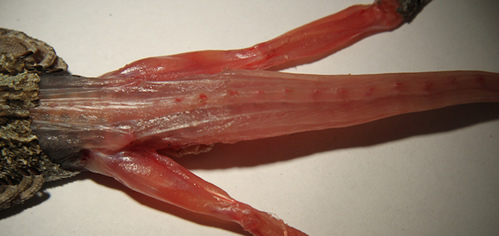
We are examining the biochemical and contractile properties of these muscles to verify whether this is the case. We are measuring Citrate synthase (CS) activity, which is a marker of oxidative capacity and mitochondrial abundance and an indicator of the oxygen requirements of the muscle.
-
Motion Signalling
Evolutionary simulations
Combining tools from evolutionary robotics and behavioural ecology to address movement-based signal evolution...
View MoreEvolutionary simulations
Project CIs:
Dr Richard Peters & A/Prof Jan Hemmi (Uni of WA)We are developing a new approach that uses live animals as selective agents to optimise the fine structure of a motion signal. This takes place in an artificial evolution environment controlled by a standard genetic algorithm.
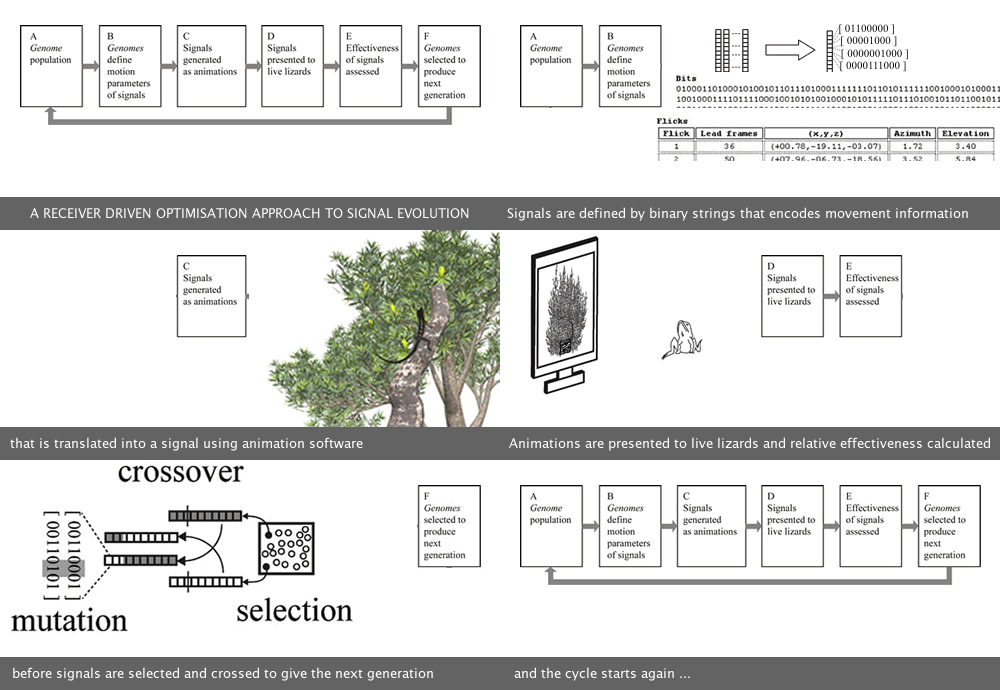
By manipulating the environmental conditions in which this evolution takes place, we can systematically explore what makes a signal effective from the perspective of a receiver under close to natural conditions.
-
Motion Signalling
Population differences in signal structure within species
Jacky lizards are found in diverse haitats that might influence signal structure ...
View MorePopulation differences in signal structure
Project CI:
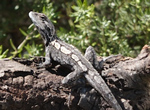
Mr Marco Barquero (Macquarie University)Jacky lizards are found in different habitats across New South Wales and Victoria, with their range believed to extend to Queensland and South Australia. Marco is examing population differences in behaviour, including signalling.
Visit WebsiteVideo shows jacky lizard in Lane Cove National Park, Sydney (supplied by Marco Barquero).
-
Vibration signalling
Mechanisms of mate attraction in psyllids
Characterizing vibratory signals of psyllids and the transmission properties of host plants ...
View MoreVibration signalling by psyllids
Project CIs: Ms Rachael Wood & Mr Umar Lubanga
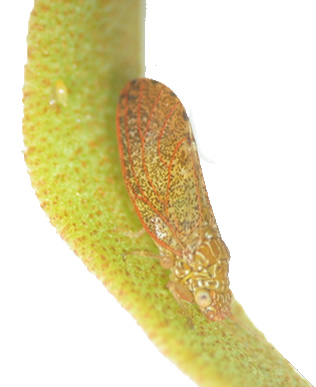
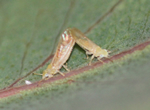
Psyllids are small cicada-like insects that are pests of forestry because populations cause extensive leaf loss and sometimes tree death. Mating strategies are crucial to their success and Australian psyllids are believed to use vibratory signals for attracting mates, although the mechanisms are largely unknown. We are characterizing the vibratory signals of several psyllids and the transmission properties of host plants to investigate the mechanisms of mate attraction.


The image above depicts a duet and image of Anoeconeossa bundoorensis
-
Lizard patterns
Characterising Jacky lizard patterns
Investigating the diversity and functional significance of body patterns and markings of jacky lizards ...
View MoreCharacterising Jacky lizard patterns
Project CI: Mr Jonathan Salisbury
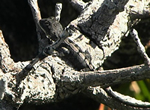
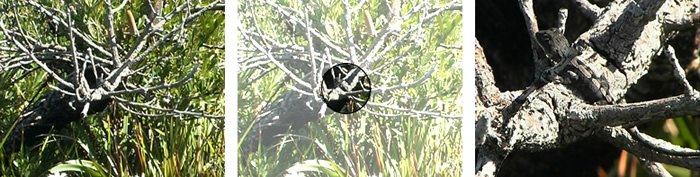
Many animals exhibit brilliant colour patterns - jacky lizards are not one of these species. However, they do exhibit interesting body patterns which may serve an important functional role in camouflage.
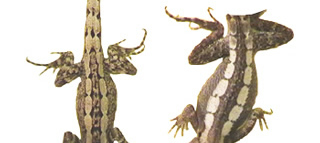 We will investigate the functional significance of body patterns and markings of jacky lizards by photographing them in the wild and use modern quantitative techniques to characterise them in the context of their natural surroundings. We will also run choice tests in large captive facilities in our Zoology Reserve to see whether lizards choose basking sites wisely under the threat of predation.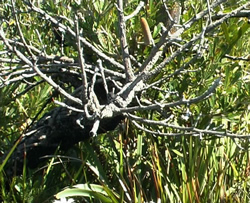
Roll-over image to reveal lizard
Click on image to zoom in -

Animal Welfare
Enrichment for cats in shelters
Investigating environmental enrichment methods to reduce stress and improve the welfare of cats ...
View More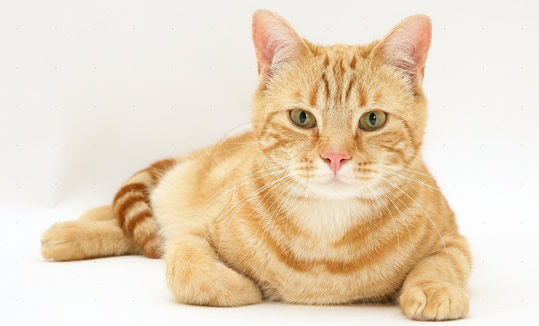
Animal Welfare: cats in shelters
Project CI:
Ms Lydia RehnbergThe aim is to investigate environmental enrichment methods that have the potential to effectively reduce stress and thereby improve the welfare of domestic cats that are held in captive conditions. We focus on different resting spots and benefits of extended social interaction by a caretaker.
-

Other collaborations
A variety of other projects from motion masquerade in leaf insects to assessing temperament in dogs ...
View MoreMotion masquerade in spiny leaf insects Extatosoma tiaratum
Ms Xue Bian
Prof Mark Elgar
(Uni of Melbourne)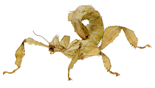
Motion masquerade in veiled chameleons Chameleo calyptratus
Dr Richard Peters
Dr Devi Stuart-Fox
(Uni of Melbourne)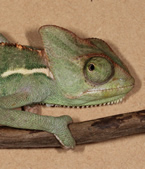
Grassland spider assemblages
Project leader:
Dr Heloise GibbJumping in Jack jumper ants (Genus: Myrmecia)
Ms Emma Birnbaum
Dr Ajay Narendra
(Australian National Uni)
Dr Richard PetersThe use of real-time heart rate monitors to assess arousal levels during canine behavioural test batteries
Ms Diana Rayment,
Dr Bert De Groef, (Dept. of Ag Science, La Trobe Uni)
Dr Linda Marston
(Monash Uni)
Dr Richard Peters
RICHARD PETERS
Department of Ecology, Environment & Evolution
La Trobe University
Bundoora VIC 3086
Australia
Tel. +61 3 9479 2234
Email. richard.peters@latrobe.edu.au